
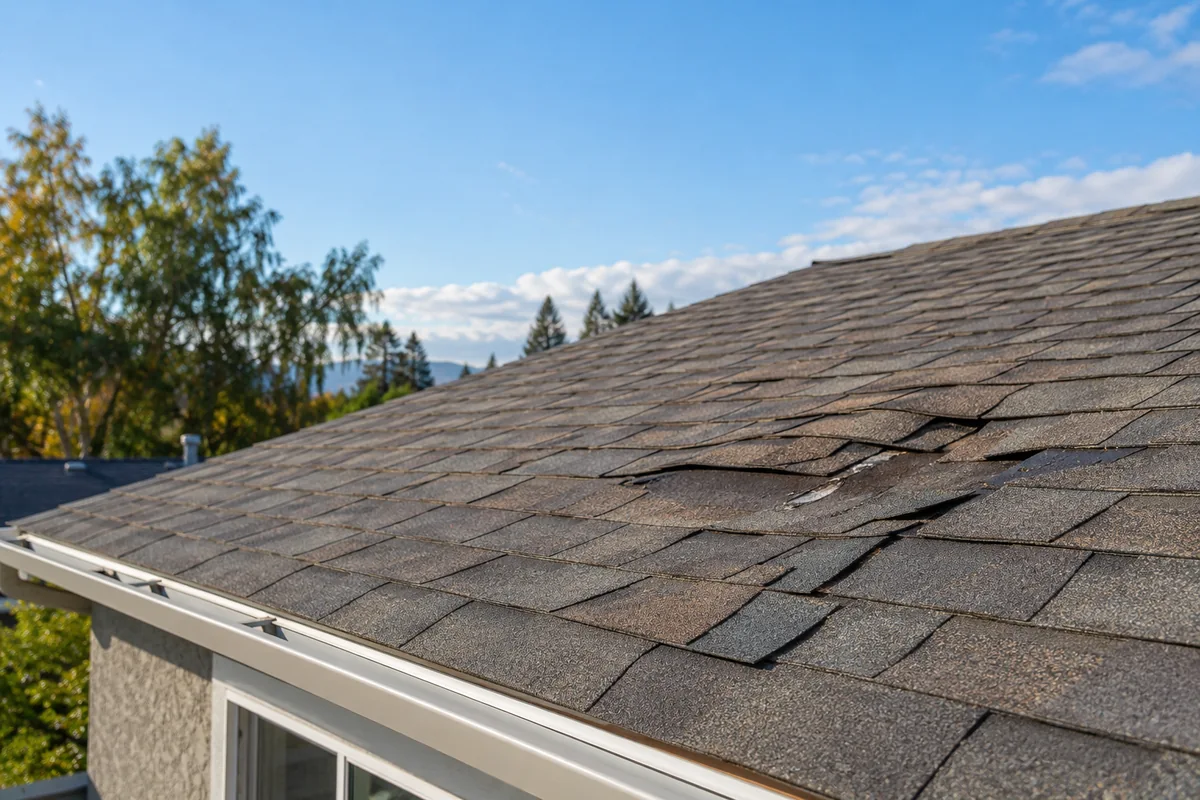
Start with the change you noticed
Tell the provider about water inside, visible displaced roofing or debris noticed from the ground. An event happening before a leak is important history, but an assessment is still needed to establish the cause and condition.
Stay away from downed wires, unstable tree limbs and wet electrical equipment. Do not climb onto a damaged or wet roof. If there is an immediate threat to life or safety, use the appropriate emergency service.
Separate immediate protection from lasting work
Temporary measures
A provider may discuss temporary protection when a permanent repair cannot be completed immediately. Ask what it covers, its limitations and how the next visit will be arranged.
Roof assessment
Ask how the provider will identify the entry point and check adjacent material. A photograph of a missing shingle does not describe every affected layer.
Permanent scope
Confirm the repair area, materials, handling of concealed findings and any separate interior work. Request written terms before authorizing a job.
Keep a simple record
Save the date you first noticed the problem, safe photos, prior repair records and any estimates or invoices. If you plan to contact your insurer, ask it what information it needs and how to document urgent work.
Our roof-leak insurance guide offers questions for that discussion. It does not promise coverage or determine the cause of loss.
Choose the relevant follow-up
For an active opening, see temporary roof tarping. If the symptom happens only in harder rain, the heavy-rain leak guide explains the observations worth recording.
A provider should distinguish damage found on site from assumptions based only on the recent weather.
Ask about service at your Gilroy address
Say whether water is still entering and whether access appears affected. Availability depends on the provider, weather, job and location. Gilroy RoofLeak does not dispatch its own repair crew or guarantee arrival times.
Questions homeowners ask
Clear answers before the callShould I climb up after a storm to check for damage?
No. Describe visible conditions from the ground or indoors. Wet roofing, hidden damage and nearby hazards make roof access unsafe for a homeowner investigation.
Does a leak after wind prove storm damage?
Timing is useful information, but it does not establish the complete cause. A provider needs to assess the roof and explain the findings.
Is temporary tarping a permanent repair?
No. Temporary protection has limits and needs a follow-up plan for assessment and lasting work.
What should I keep for an insurance conversation?
Keep safe photos, dates, prior records and invoices. Ask your insurer what else it needs and how it wants urgent work documented.
Can the whole roof need replacement after a storm?
That depends on the condition and extent of damage. Ask the provider to explain the findings supporting repair or replacement.
Do you guarantee an emergency appointment?
No. You can call about an active concern, but an independent provider must confirm availability and scheduling.