
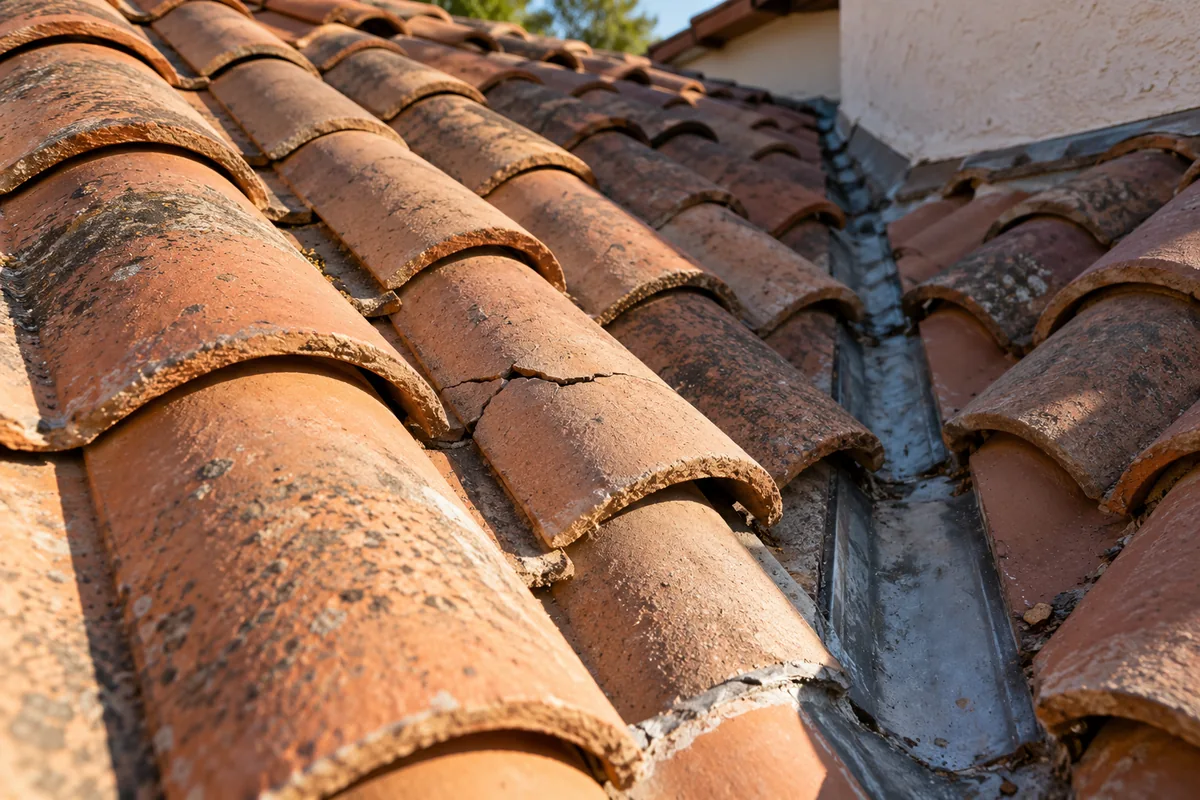
Look beyond the one damaged tile
The outer tiles are one part of the roof assembly. Underlying materials and details around valleys, walls and openings also affect how water is kept out. A provider should explain whether the proposed work concerns only a tile or a failure beneath or beside it.
Note when the damaged area was first noticed. If a previous repair involved lifting tiles, share the invoice and approximate work location. Avoid walking on the roof to compare the details yourself.
Three details worth sharing
What is visible from a safe position?
A slipped tile, a gap near a roof junction or debris in a valley can be described without roof access. Say when you cannot see the roof clearly; a guess is less useful than an honest limitation.
What happened inside?
Record the room, size of the wet area and whether moisture arrived during rain or afterward. Mention whether the mark has appeared more than once.
What has changed?
Tell the provider about nearby skylight work, solar work or a previous patch if known. That history may help shape the assessment, without proving the cause.
Questions before agreeing to a tile repair
- What is the suspected entry point, and what supports that finding?
- Will any tiles be lifted to inspect the underlying condition?
- How will reusable, damaged and matching replacement tiles be handled?
- Does the scope include affected flashing or concealed material?
- What findings could require a revised price or additional authorization?
Ask for a written description of the work. If matching tiles are difficult to source, discuss the options and appearance before accepting a substitute.
When another roof detail matters
A leak near a chimney or wall may involve flashing. Moisture at an overhead window may call for a skylight assessment. These related service pages help you describe the location without deciding on a repair in advance.
For the larger question, read when a leaking roof may be repairable. The condition of the roof system matters more than the appearance of one tile.
Ask about tile-roof service for your property
Call with the Gilroy address, roof material if known and whether water is still entering. The independent provider checks the job and availability. Verify required licensing and insurance before hiring, using California Contractors State License Board’s hiring guidance as a starting point.
Questions homeowners ask
Clear answers before the callDoes a cracked tile always explain an indoor leak?
No. The tile may be relevant, but nearby details and underlying layers can also matter. An assessment is needed to connect the roof condition to the indoor symptom.
Can a few tiles be replaced without replacing the roof?
That can be possible, depending on the tile supply, roof condition and the actual source of the leak. Ask how the proposed work addresses water entry rather than appearance alone.
Should I take a closer photo from the roof?
No. Use a safe ground-level or indoor viewpoint. Roof access creates a fall risk and can damage tiles.
What if replacement tiles do not match?
Discuss the available options, appearance and any proposed wider work with the provider before authorizing the repair.
Can flashing fail on a tile roof?
Roof openings and junctions need water-management details regardless of the outer covering. Ask whether the assessment includes those areas.
Who gives the tile repair estimate?
The independent provider gives the estimate and terms. Gilroy RoofLeak does not inspect the roof or determine the repair price.