
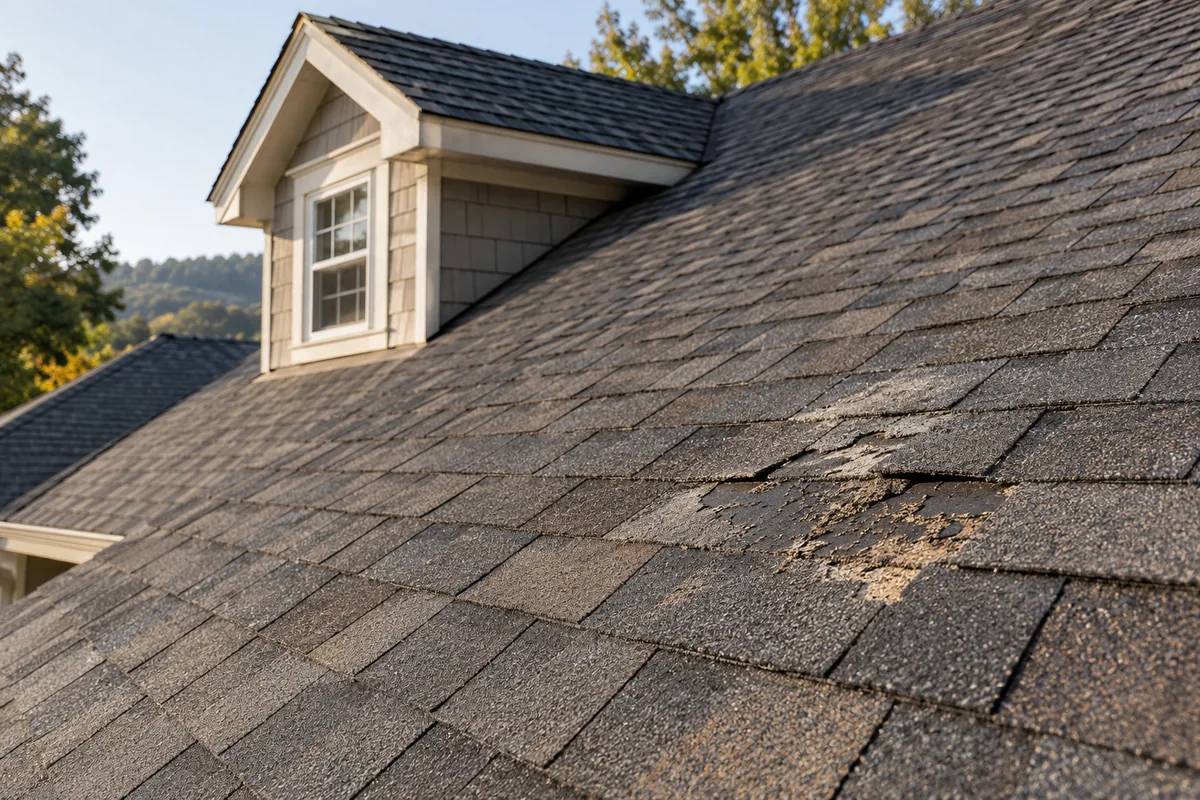
A leak is a symptom, not the whole diagnosis
Water inside tells you that something needs attention. It does not establish how much of the roof has failed. One detail at a vent or junction can be different from widespread deterioration across the roof covering and underlying material.
A provider should explain the suspected entry point and the condition around it. Ask what evidence supports the proposed repair area rather than deciding from the ceiling stain alone.
What makes a repair recommendation useful?
A defined cause
Which component or connection is thought to be admitting water? How was that conclusion reached?
A defined scope
What will be removed, restored or replaced? Does the work include adjacent material needed to reach the source?
A defined limit
What does the repair leave untouched, and what condition could change the recommendation? A careful explanation should include those limits.
When replacement is suggested
Ask the provider to show the broader findings. Questions may concern the condition of surrounding materials, previous repairs and whether the roof can be restored reliably with localized work. A roof’s age is context, rather than a complete assessment by itself.
If the recommendation is substantial and you remain uncertain, consider another qualified assessment. Compare the reasoning and written scope, rather than treating the lowest total as the same job.
Common details worth discussing
A leak near a junction may call for flashing work. A damaged outer tile may require attention to the tile system beneath it. A returned symptom after patching calls for a fresh look at the earlier repair.
These examples are conversation prompts, not a list of diagnoses for your property.
Before you approve either option
Request a written scope, exclusions, material details and a process for additional findings. Ask about any contractor warranty in writing. Review the estimate comparison guide and verify the provider before hiring.
Questions homeowners ask
Clear answers before the callDoes one leak mean I need a new roof?
No. A leak does not establish the extent of failure. A provider needs to assess the source and wider roof condition.
Can a flashing problem be repaired on its own?
It may be possible if the surrounding condition supports that scope. Ask what the repair includes and why it addresses the source.
Is the roof’s age enough to decide on replacement?
Age is useful context, but the actual condition and findings should support the recommendation.
Should I get another assessment?
If a major recommendation remains unclear, another qualified assessment can help you compare the reasoning and scope.
Does a repair guarantee no future roof leaks?
No broad guarantee should be assumed. Discuss the contractor’s specific written warranty and exclusions.
How do I compare repair and replacement estimates?
Compare the cause being addressed, materials, affected area, exclusions and handling of additional findings, alongside the price.