
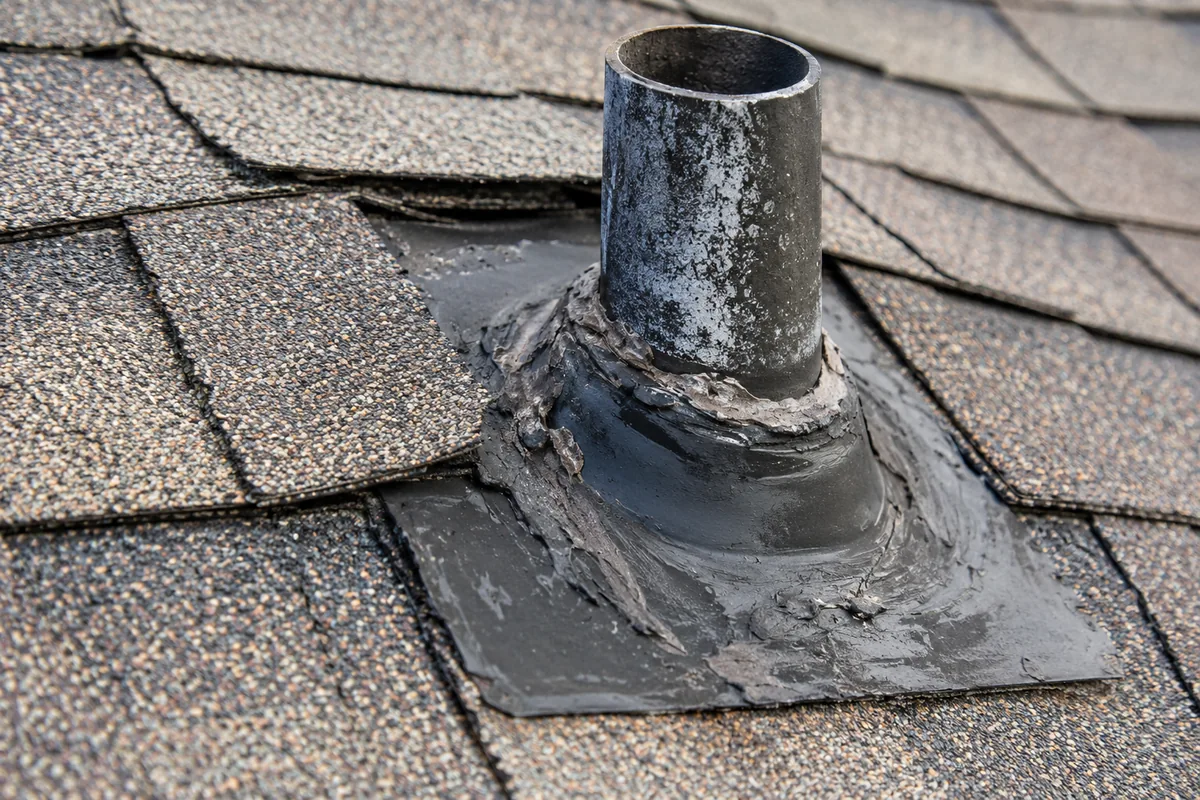
Begin with the earlier agreement
Find the invoice, written scope, photographs and any warranty terms. Was the work described as temporary protection, a localized repair or a wider correction? That distinction helps frame the follow-up conversation.
Contact the original provider about the symptom and ask how its written terms apply. Avoid assuming that every returned mark proves the same failure or that any promised remedy covers unrelated roof conditions.
Compare the symptom carefully
Same room, same first wet point?
Record whether the new moisture begins in the same location or has shifted. A nearby stain does not prove an identical water path.
Same weather pattern?
Note whether the recurrence follows harder rain, a different wind direction or a longer wet period than before.
Any work since the patch?
Mention changes involving the roof, vents, skylights or other nearby systems. Share the facts without deciding who is responsible in advance.
Ask what the fresh assessment will do differently
Which entry point was suspected before? What evidence now supports or changes that view? Ask whether the assessment will consider adjacent roofing, concealed layers and other possible sources.
If another surface patch is proposed, ask why it fits the current finding. Roof flashing and skylight connections are examples of details that may need their own assessment, rather than a blanket treatment.
Understand the next written scope
Ask how the new proposal differs from the previous work, what is excluded and how additional findings would be authorized. Discuss any warranty and keep the terms in writing. Read how to compare repair estimates before agreeing.
A recurring symptom does not automatically establish that the whole roof needs replacement. The repair-versus-replacement guide explains the wider questions to ask.
If water is active again
Tell the provider promptly that water is entering. Stay clear of unsafe ceiling areas and wet electrical equipment. Ask about appropriate temporary protection and follow-up availability; do not go onto the roof to inspect the old patch yourself.
Use the contact page to discuss independent service availability at the Gilroy property.
Questions homeowners ask
Clear answers before the callDoes a returned leak prove the patch was done badly?
Not by itself. The earlier scope, current condition and actual source need review. Keep the records and ask the provider to explain the findings.
Should I contact the original provider?
That is a useful first step, particularly if you have written warranty or follow-up terms. Explain the symptom and ask how those terms apply.
Can the new stain come from another source?
It can. A similar indoor location does not prove the same roof entry point.
Should the roof be replaced after two repairs?
The number of repairs alone does not settle the decision. Ask about the roof’s condition and evidence supporting a localized or wider scope.
What if I no longer have the invoice?
Ask the original provider for the work records and write down what you can accurately recall. Make uncertainty clear.
Can Gilroy RoofLeak enforce a contractor warranty?
No. Discuss warranty terms directly with the contractor. This service does not warrant or guarantee independent provider work.